How to Knit With Wool Alpaca Blends
That first swatch tells you almost everything. Wool gives you memory and resilience. Alpaca brings warmth, softness, and fluid drape. Put them together, and you get a yarn that can feel deeply satisfying in the hands – but only if you knit it on its own terms. If you want to learn how to knit with wool alpaca blends well, the key is understanding what each fiber contributes and where the blend asks for a different approach.
A wool alpaca blend is not just a softer version of wool. It behaves differently on the needle, in the finished fabric, and over time. For knitters who care about natural fiber integrity, stitch quality, and garments that earn their place in a handmade wardrobe, that difference matters.
Why wool alpaca blends knit differently
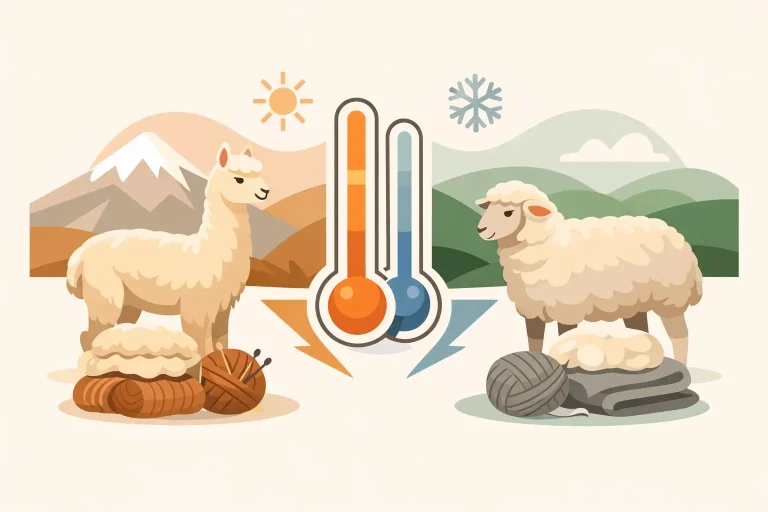
Wool and alpaca each bring distinct strengths. Wool has crimp, which gives yarn elasticity, bounce, and recovery. That spring helps stitches hold their shape and makes many wool yarns forgiving to knit. Alpaca is smoother and often less elastic, but warmer by weight and notably soft against the skin. It also tends to create more drape.
When the two are blended, you get a balance that can be beautiful for sweaters, hats, scarves, and textured accessories. But the exact ratio changes the outcome. A blend with more wool often has better stitch memory and clearer ribbing. A blend with more alpaca usually feels silkier and hangs with more fluidity, though it may stretch more in wear.
That is why pattern choice matters. A structured cardigan with heavy cables may thrive in a wool-forward blend but grow too much in a yarn with a high percentage of alpaca. A simple stockinette cowl, on the other hand, can look richer and more elegant when alpaca softens the fabric and deepens the drape.
How to knit with wool alpaca blends without fighting the yarn
The easiest mistake is treating the blend like standard wool. If you knit tightly to force structure, the fabric can become dense and lose the softness that makes the blend appealing in the first place. If you knit too loosely, you may end up with a garment that stretches beyond what you intended.
Start with a real swatch, not a symbolic one. Knit a generous sample, wash it the way you plan to wash the finished piece, and let it dry completely. Then hang it for a few hours if the project is a garment. This matters because alpaca can relax after washing and wear, and a flat, unwashed swatch will not tell the whole story.
Needle choice also changes the experience. Many knitters prefer wood or bamboo needles for wool alpaca blends because the yarn has less grab than wool alone and can slide more easily. If your stitches are already tight, metal needles may still work well, but if the yarn feels slippery or the fabric is coming out uneven, a grippier needle material often helps.
Pay close attention to your hands as you knit. Wool alpaca blends usually reward a steadier rhythm rather than pulling hard on the working yarn. Too much tension can flatten the loft and make the stitches look strained. A more relaxed hand lets the blend keep its natural character.
Best stitches and projects for wool alpaca blends
Not every stitch pattern shows up the same way in this kind of yarn. Because alpaca can soften stitch edges, highly intricate texture may read less crisply than it would in a springy wool. That does not mean texture is off the table. It means choosing texture with intention.
Stockinette, garter, broad ribs, simple cables, seed stitch, and clean lace motifs often perform well. These stitches let the fiber speak without demanding sharp architectural definition. Wool alpaca blends are especially good where you want warmth and softness with a polished surface – think hats, cowls, shawls, pullovers, and relaxed cardigans.
For socks or hard-wearing mittens, it depends on the blend. Wool supports durability and recovery, but alpaca on its own is not usually the first choice for high-friction, high-stretch areas. If the yarn includes a firm wool base and is spun with enough twist, it may still work beautifully. You just want to match the yarn to the use rather than assume softness equals versatility.
Gauge, drape, and fit
Gauge is not just about getting the right number of stitches per inch. With wool alpaca blends, gauge is also about deciding what kind of fabric you want. A tighter gauge creates more structure and can help a garment keep its shape. A slightly looser gauge highlights softness and drape. Neither is automatically better.
What matters is the project. A slouchy hat can benefit from a bit of fluidity. A sweater with set-in sleeves may need more control. If you are between needle sizes, swatch both. One may meet pattern gauge, but the other may create a fabric better suited to the design.
This is especially true for garments with vertical weight, like tunics or long cardigans. Alpaca adds warmth without much bulk, but it also adds gravity to the fabric. A sweater that looks perfect fresh off the needles may lengthen after blocking or wear. If you are knitting from the top down, try it on often. If you are knitting pieces flat, measure carefully and trust your blocked swatch.
Blocking and finishing wool alpaca blends
Finishing matters with natural fibers, and wool alpaca blends respond well to a gentle hand. Wet blocking is usually enough to even stitches and settle the fabric. Use lukewarm water, a fiber-friendly wash if desired, and avoid agitation. Support the piece fully when lifting it from the water, since a saturated alpaca-rich fabric can stretch under its own weight.
When shaping during blocking, resist the urge to overextend. You can always ease fabric into place, but once a piece has been stretched aggressively, it may not spring back the way a wool-heavy yarn would. Lay it flat, pat it to measurements, and let the blend dry at its own pace.
Seaming also deserves care. Because these blends can be soft and fluid, a firm, tidy seam can provide useful structure in sweaters and vests. The seam is not just construction – it is part of the engineering.
Caring for finished knits
If you are knitting with thoughtfully sourced American-grown fibers, the goal is not just to make something beautiful. It is to make something that lasts. Wool alpaca blends generally do best with gentle washing and flat drying. That preserves shape, surface, and loft.
Pilling can happen, especially in softer yarns and in areas of friction like underarms or cuffs. That is normal with many natural fibers, particularly in the early life of a garment. A light de-pilling now and then is part of maintenance, not a sign of poor quality.
Storage matters too. Clean the piece before putting it away for the season, and store it where airflow is possible but pests are discouraged. Natural fibers ask for stewardship, but they repay it with long wear and a character synthetic yarns rarely achieve.
Common mistakes when learning how to knit with wool alpaca blends
Most problems come down to expectations. Knitters often expect crisp wool behavior from a yarn that was designed for softness and drape. Or they choose a flowing, alpaca-rich blend for a project that needs strong recovery.
The other common mistake is skipping the wash test. A swatch that looks modestly relaxed on the needle may transform after blocking. That is not a flaw. It is simply the yarn showing its true nature.
There is also a temptation to over-handle the fabric while knitting, especially if you are chasing perfectly uniform stitches. Usually, the better approach is to let blocking do part of the work. These blends often bloom and settle beautifully once washed.
For makers who value fiber provenance and craftsmanship, that is part of the appeal. A well-made wool alpaca blend carries the strengths of both animals and the decisions made all along the way – from responsible husbandry to careful spinning. Imperial Yarn has long centered that kind of integrity in American-grown natural fibers, and it shows in how the yarn behaves in the hand and in the life of the finished piece.
The best way to knit these blends is to work with the fiber, not against it. Let the wool give you structure where you need it. Let the alpaca bring warmth and grace where it shines. When you choose the right project, swatch honestly, and finish with care, the fabric will tell a better story than force ever could.